« Social Promotion Rap Up | Main | Educational (Anti)depressants: Some Links »

Professors Strike Back?

| 5 Comments
profs%20strike%20back.jpg
What's worse: evaluating college quality using standardized tests (Madame Secretary's pet project), or relying on Rate My Professors? At Rate My Professors, students rate their professors on "educational" qualities like their hotness, their easiness, their helpfulness, and their clarity. (Here's a nice Village Voice article about RMP; hat tip: Mike Arnzen). Now MTV has kicked off a spoof called "Professors Strike Back," in which profs respond to comments ranging from "I want to be her slave" to "Eats children for breakfast."

A mocking blog called Rate Your Students has emerged in response - you can read about some unbeloved students in this post (Head-Nodders, Laptop Kids, Winter Flip Floppers, and Some Nefarious Wannabe Gangsters. Where is that Walmart Application?).

Don't get me wrong - I'm all for the course evaluations that are typical at most campuses. Because everyone (who shows up) completes one, you have a full sample of students - not just the angry and elated - and narrative sections allow students to provide meaningful feedback on how to tweak the course in the future. Propositioning is generally not included, though students still throw in the occasional pediatric temper tantrum.
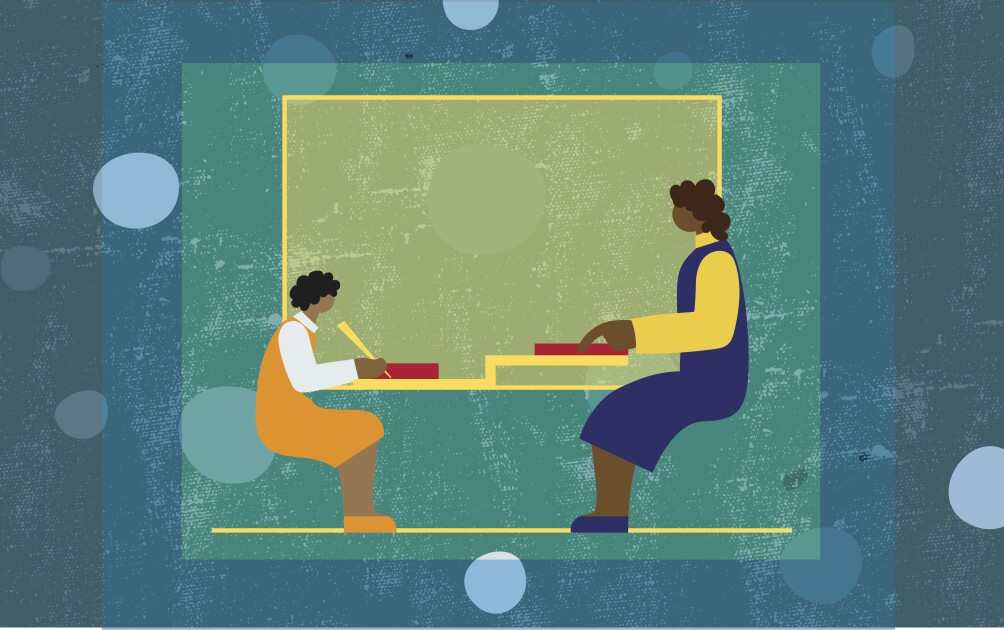
I'm undecided on whether and how colleges should make course evaluations public. On one hand, the public release of formal evaluations would help students decide among many courses. On the other hand, a student-driven evaluation system creates incentives to pander to Gen Facebook, and further encourages the "I'm paying, so I deserve an easy A" consumerism of many students.

So I'm on the fence about the role of course evaluations in assessing college teaching. Readers, what's your take? How should profs' teaching be evaluated?

Update: To clarify, there are at least 4 questions raised by this post:

1) How should learning be evaluated in college?

2) Are course evaluations a fair and comprehensive measure of college teaching? (Of course not, in my opinion.)

3) What should universities do with student course evaluations?

4) What are the potential risks/benefits to students and profs of making them public?
5 Comments

Wait a second... when did a survey become "evaluation"?

This is a double-barreled post, eduwonkette. Are you interested in how colleges should evaluate faculty teaching, or what should be done with students' end-of-term course evaluations? Let me be provocative (a skoolboy's prerogative) and say that I don't think that end-of-term course evaluations should be treated as a measure of what students have learned, regardless of what the students have said. That's because the depth and scope of that learning may not be evident on the last day of the semester. It may not be until sometime later, when the course and its content are juxtaposed with different contexts and subsequent learning experiences, that what was learned in the course might come into focus. I'd rather rely on a student's retrospective account a year later. In my own experience as a student, I haven't always been able to predict what would stick with me (or transfer, the more technical learning term) after a course is over.
(Of course, maybe I'm just rationalizing the fact that some of my students come away from my classes saying, "What the hell was that all about?")

Sherman and Skoolboy,

You're right that there are multiple questions posed in this post:

1) How should learning be evaluated in college?

2) Are course evaluations a fair and comprehensive measure of college teaching? (Of course not.)

3) What should universities do with student course evaluations?

4) What are the potential risks/benefits to students and profs of making them public?

The postponed evaluation approach is interesting, skoolboy. I can recall two very negative course evaluations that I wrote in college. Given the chance to write them again, one of the two profs would receive a positive evaluation.

1) How should learning be evaluated in college?
I agree with skoolboy that evaluations are less about "what" a student has learned, but rather how they learned it. Was it effective, provocative, did they think, explore, change viewpoints? Evaluations can assess this in a more abstract kind of way.

2) Are course evaluations a fair and comprehensive measure of college teaching? (Of course not, in my opinion.)
While course evaluations may be arguably unfair, they do present a random enough sample of student opinion to offer the school and the professor a wide angle view of course value. Most often (at least in my experience) evaluations were optional, and anonymous, making it easier for students to evaluate the professor fairly, ie: honestly, thoroughly and without it affecting their grade.

3) What should universities do with student course evaluations?
In the case of public university, those state funded ones, evaluations should be made public. People paying for the education of the their children, their neighbors and others should have the right to know how professors are being evaluated, just like any other state paid professional. However, I do think that releasing evaluations for the previous year would help to prevent any "professor shopping" by students who are looking to skate through school, while providing a way to publicly reveal trends of courses or professors that might need restructuring or reconsideration.

4) What are the potential risks/benefits to students and profs of making them public?
I think the potential risk would be that professionals would be required to remain up-to-date in their field, students would be allowed to choose courses/professors that suited their learning style/preferences, and higher education, like public education in the primary grades, would be forced to reform to meet the demands of a changing society and workforce. Unlike technical schools, or research programs, much of college education still takes place in a traditional lecture format that is increasingly irrelevant to today's students.

I had a colleague that received criticism about his score on the end of term evaluations.

Next term he told students that anyone that received an A on his exams would get free pizza and cola at a pizza party, his treat.

His course was just as hard, same requirements, same hard exams, his evaluation scores went significantly up.

It's all about perception. They now perceived him as "caring" about them. Before all the hard work he put in the class wasn't enough evidence that he cared what they learned. The power of free pizza cannot be ignored!

Comments are now closed for this post.

Advertisement

Archives

Recent Comments

  • Doctor T: I had a colleague that received criticism about his score read more
  • everydayjae: 1) How should learning be evaluated in college? I agree read more
  • eduwonkette: Sherman and Skoolboy, You're right that there are multiple questions read more
  • skoolboy: This is a double-barreled post, eduwonkette. Are you interested in read more
  • Sherman Dorn: Wait a second... when did a survey become "evaluation"? read more

Most Viewed
On Education Week